
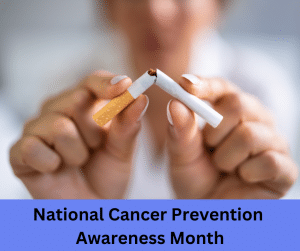
 February is National Cancer Prevention Awareness Month. Cancer is a devastating disease and a leading cause of death worldwide. The World Health Organization estimates that one in four deaths around the globe is caused by cancer. While genetic predisposition plays a role in the likelihood that someone will develop a complex disease, cancer risk can also be influenced by different environmental and lifestyle factors.
Tobacco
Tobacco use is a significant risk factor for cancer. According to the Cancer Research Institute, smoking is the most preventable cause of cancer, accounting for nearly 20% of all cancer cases and almost 29% of cancer deaths. Using tobacco increases a person’s risk for 20 different types of cancer, including lung, esophageal, colorectal, liver, pancreatic, and ovarian cancer. Those exposed to secondhand smoke face similar health detriments. Quitting smoking at any age will reduce a person’s cancer risk, regardless of how long they have been smoking.
Alcohol
The consumption of alcohol accounts for 5.4% of cancer cases. Alcohol increases the risk of certain cancers, including oral, esophageal, liver, larynx, and breast cancer. The Centers for Disease Control and Prevention recommend completely abstaining or limiting alcohol intake to no more than two drinks per day for men or one drink per day for women.
Diet & Exercise
A higher Body Mass Index (BMI) is associated with an increased risk for 18 different types of cancer. High BMI is correlated with chronic inflammation, decreased immune function, and changes in hormones, all of which are risk factors for cancer. Diet can also play a significant role in cancer risk. Consumption of red meats, like beef or lamb, and processed meats, like cold cuts and sausages, have been linked to an increased risk for colorectal cancer. Limiting your intake of these types of meat to 3 portions weekly while consuming a balanced diet rich in fruits, vegetables, and whole grains can decrease your risk. The World Health Organization also recommends at least 150 – 300 minutes of moderately intense physical activity each week. Regular exercise can reduce your risk for many chronic diseases, including cancer.
Ultraviolet (UV) Exposure
UV radiation is the primary cause of melanoma, a deadly form of skin cancer. This type of radiation is naturally produced by the sun and artificially created by tanning beds. Everyone is susceptible to cancers caused by UV radiation. To limit exposure, the US Food & Drug Administration recommends using broad-spectrum sunscreen of at least SPF 15, avoiding tanning beds, and seeking shade during peak sun hours. Protective eyewear may decrease the risk of eye-related cancers, such as conjunctival melanoma.
Early Detection & Diagnosis
Early cancer detection is crucial because it increases the chances of successful treatment and improves outcomes by providing care at the earliest possible stage. Regular screenings, such as mammograms, pap smears, colonoscopies, or prostate screenings, can help identify cancers in the early stages, even if you are asymptomatic. Speak with your primary care physician about what screenings may suit you.
Early diagnosis gave my family more time with a loved one who passed away from cholangiocarcinoma, a rare and aggressive form of cancer in the bile ducts. Cancer is most treatable in its early stages, so speak with your doctor about any symptoms you may be experiencing. Early intervention is key to improving cancer outcomes.
Deanna Kilanowski is a contributing writer for Cortland Prevention Resources, a division of Family & Children’s Counseling Services.
Family & Children’s Counseling Services offers tobacco cessation assistance. You can also visit https://nysmokefree.com/ for additional resources.