
Family & Children’s Counseling Services was pleased to contribute to an article about opioid settlement funding which was published as a joint project by KFF Health News, the Johns Hopkins Bloomberg School of Public Health, and Shatterproof. Staff and a client from our Rapid Opioid Assistance in Recovery (ROAR) program were interviewed and featured in that article.
With permission from KFF Health News, we are sharing excerpts about our ROAR program and New York State’s use of opioid settlement dollars. The full article, including data charts and information about other programs in other states, is available on the KFF website.
Payback: Tracking Opioid Cash
How Are States Spending Opioid Settlement Cash? We Built a Database of Answers
By Aneri Pattani, Data visualizations by Lydia Zuraw
December 16, 2024
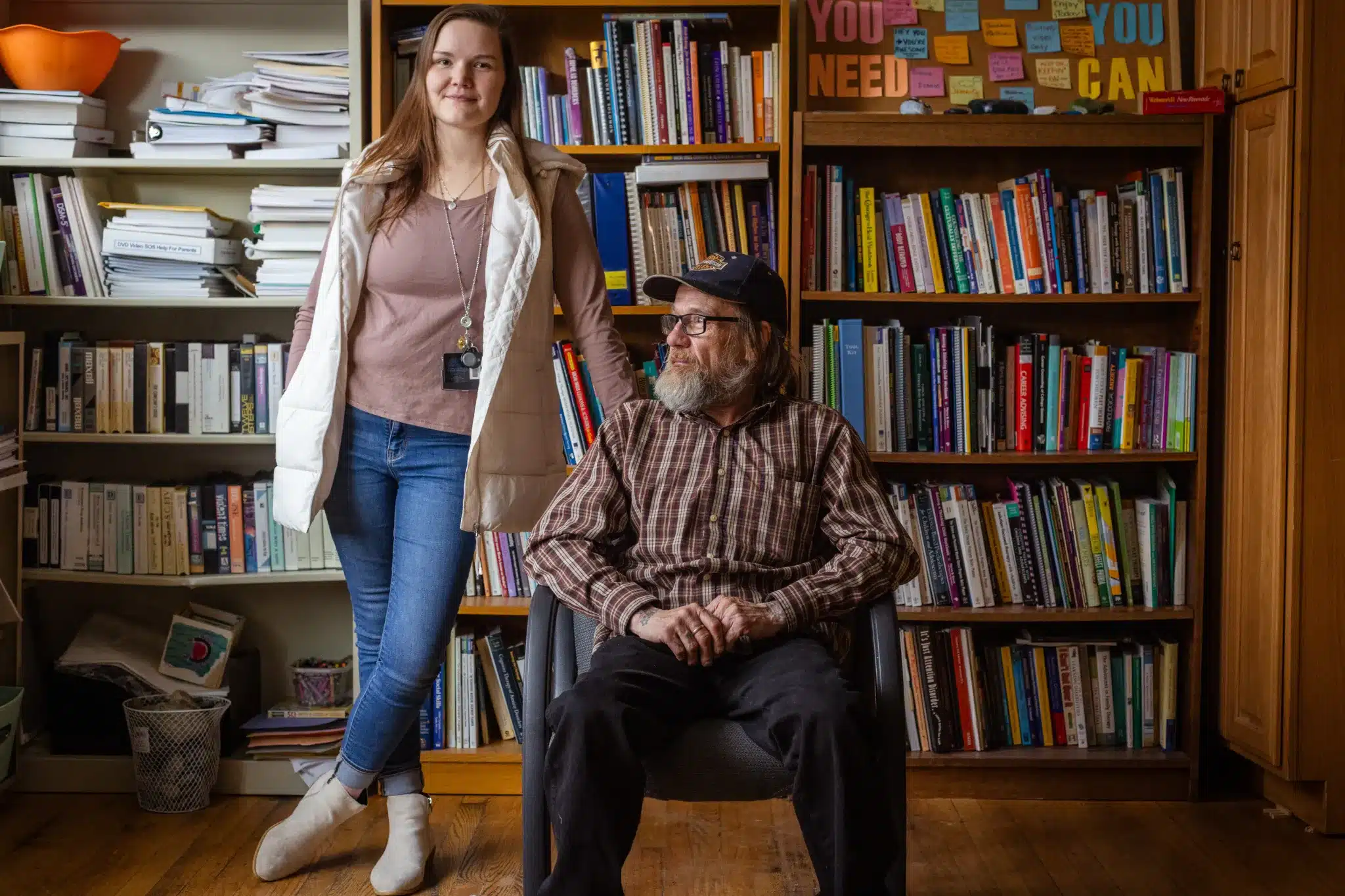
John Greene and his counselor Emily Georgia at Family & Children’s Counseling Services in Cortland, New York. (Photo: Celia Talbot Tobin for KFF Health News)
In the past few years, state and local governments across the U.S. have begun spending billions in opioid settlements paid by companies accused of fueling the overdose crisis. But where is that money going, who is getting it, and is it doing any good?
KFF Health News, partnering with researchers at the Johns Hopkins Bloomberg School of Public Health and Shatterproof, a national nonprofit focused on addiction, undertook a yearlong investigation to find out.
Dozens of interviews, thousands of pages of documents, an array of public records requests, and outreach to all 50 states resulted in a first-of-its kind database that catalogs more than 7,000 ways opioid settlement cash was used in 2022 and 2023. It’s the most comprehensive resource to date tracking some of the largest public health settlements in American history.
Among the findings:
- States and localities received more than $6 billion in opioid settlement funds in 2022 and 2023. According to public records, they spent or committed about a third of that amount and set aside about another third for future use. The final third was untrackable, as many jurisdictions did not produce public reports on the funds.
- Reports of spending tracked the minuscule to the monumental, from $11.74 to buy postage in Yavapai County, Arizona, to more than $51 million to increase the addiction treatment workforce in California.
- States allotted, on average, about 18% of their funds for addiction and mental health treatment; 14% for recovery services such as housing, transportation, and legal aid; 11% for harm reduction efforts such as overdose reversal medications; and 9% for prevention programs that aim to stop people from developing substance use disorders. States committed, on average, about 2% for syringe service programs, through which people can get sterile needles. (A variety of entities received this money, from law enforcement to nonprofit organizations to government agencies.)
- Governments reported spending more than $240 million on purposes that did not qualify as opioid remediation. (Most settlements allow states to spend up to 15% of their funds this way.) Most of this tranche went to legal fees, but several jurisdictions funneled money to their general fund. One county even sent funds to its road and bridge department.
- Several cities and counties reported expenditures they said addressed the overdose crisis but that would leave an average person scratching their head — such as $33.07 to an anti-abortion pregnancy center in Sandborn, Indiana, and $30,362 to screen first responders for heart disease in Oregon City, Oregon.
Despite the recent decline in overall overdose deaths in the U.S., more than 90,000 people still died in the 12 months ending July 2024 and rates are rising in many Black and Native American communities.
Opioid settlement payouts are expected to total about $50 billion over nearly two decades, paid by more than a dozen companies that made or distributed prescription painkillers, including Johnson & Johnson, Walgreens, and Walmart. Although it’s a large sum, it’s dwarfed by the size of the crisis, making each dollar that’s spent critical.
KFF Health News and its partners reviewed hundreds of settlement spending reports, extracting expenditures line by line, and developed a methodology to sort the expenditures into categories like treatment or prevention. States were given an opportunity to review the data and comment on their spending.
Treatment a Clear Winner

Greene is four months into recovery and he credits a new program that Family & Children’s Counseling Services started with opioid settlement money. (Photo: Celia Talbot Tobin for KFF Health News)
The top priority to emerge from early opioid settlement spending was treatment, with more than $416 million spent or committed to residential rehabs, outpatient counseling, medications for opioid use disorder, and more.
The state of New York — which spent the most on treatment — allocated about $22 million of that for programs that make the gold standard for care as easy as possible for patients: providing same-day prescriptions for buprenorphine, a medication that decreases cravings for opioids.
The result was a program that John Greene said changed his life.
Greene, 57, used to live in the woods down the street from Family & Children’s Counseling Services in Cortland, New York. He cycled through jails and hospitals, overdosing half a dozen times and trying rehab just as many.
But now he has four months of recovery under his belt — the longest stint since he started regularly using drugs at 14.
He said it’s because the counseling center’s new program — funded by a mix of state and local opioid settlement dollars — has a different approach. Counselors aren’t didactic and judgmental. They don’t force him to stop smoking marijuana. Several staff members have experienced addiction themselves. They drive Greene, who doesn’t have a car, to doctor appointments and the pharmacy for his buprenorphine prescription.
Now Greene lives and works with his brother, looks forward to weekly counseling sessions, and is notching small victories — such as buying his nephew toy cars as a stocking stuffer.
“It made me feel good to do something for somebody and not expect nothing back,” Greene said.
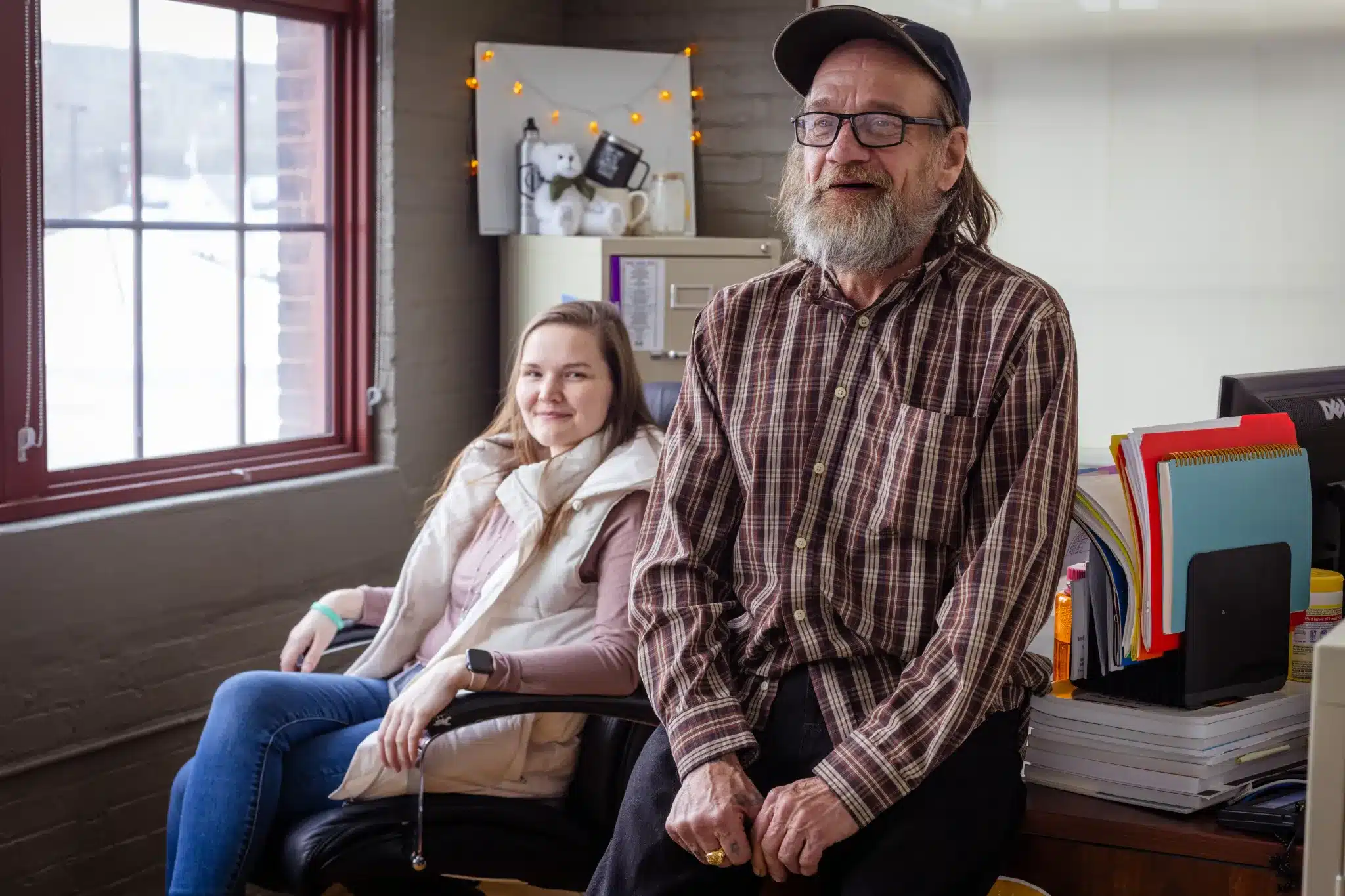
Emily Georgia, one of Greene’s counselors, said the center has worked with nearly 200 people like him in the past year. (Photo: Celia Talbot Tobin for KFF Health News)
Emily Georgia, one of Greene’s counselors, said the center has worked with nearly 200 people like him in the past year. Without the settlements, “the program probably wouldn’t exist,” she said.
The article goes on to discuss the use, and misuse, of opioid settlement funds across other states. FCCS is proud to be a positive example of appropriate use of federal dollars to support real change for the people living in the communities we serve. Read the full article on the KFF website.